A thickened, discoloured or crumbly toenail often points to a fungal nail (onychomycosis). It is a common and stubborn problem, but with the right approach and some patience much can be done. At my practice in Blaricum I treat the nail and help you get the fungus under control.
In short
- A fungal nail is yellow/white/brown discoloured, thickened and crumbly.
- I thin the nail with a burr, remove diseased material and apply an antifungal agent.
- Treatment takes patience: a healthy nail only grows out fully in 9–12 months.
- For a severe or extensive infection I refer you to the GP for additional treatment.
How do you recognise a fungal nail?
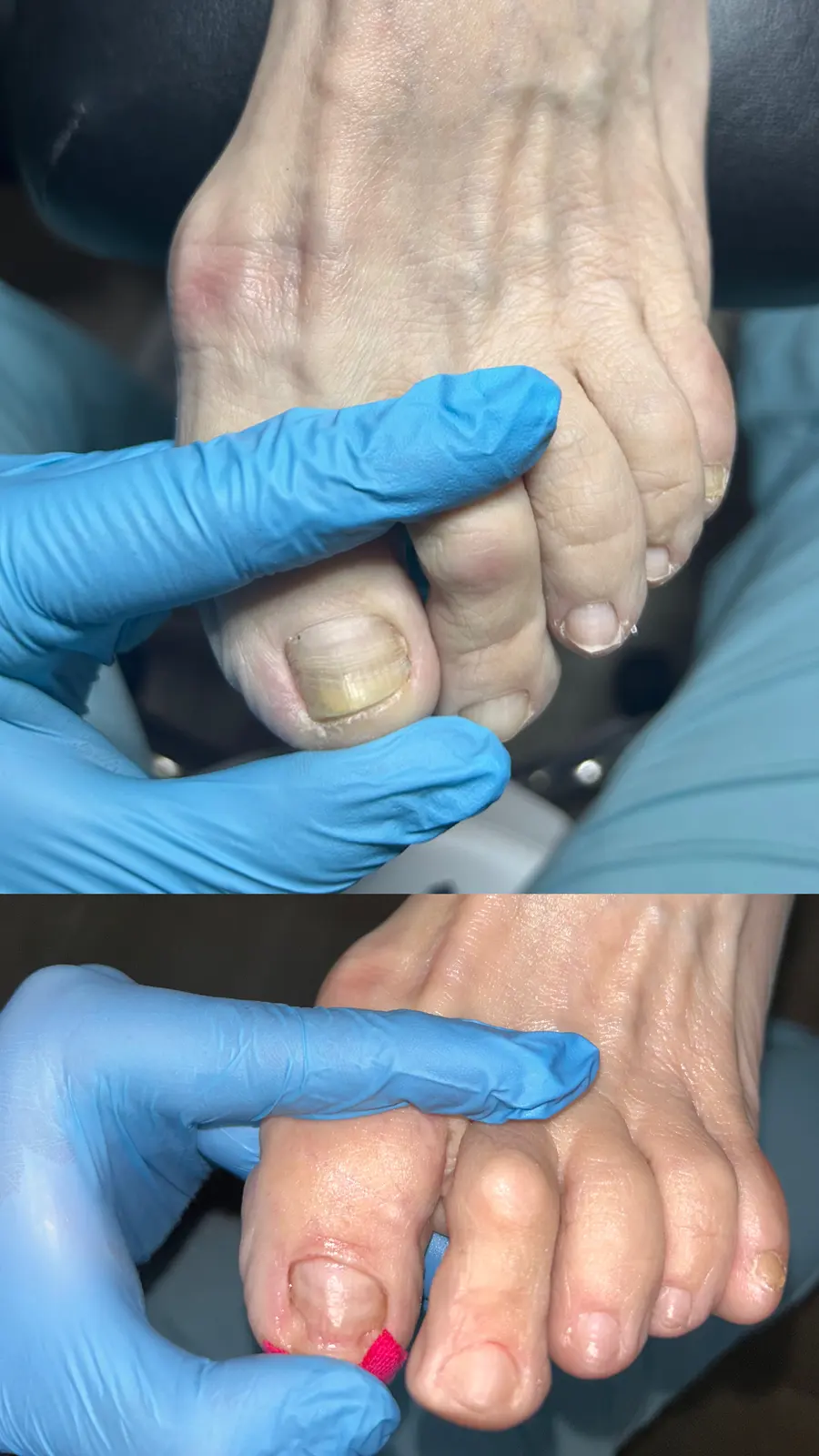
A fungal nail often starts with a yellow or white discolouration at the edge of the nail. As the fungus spreads, the nail becomes thicker, crumbly and sometimes loose from the nail bed. The nail can also smell or hurt in the shoe.
Not every thickened or discoloured nail is a fungal nail — a trauma or psoriasis can look similar. That is why I first assess the nail carefully before we start.
How do I treat a fungal nail?
I thin the nail with a burr and remove the affected, crumbly part of the plate. This reduces pressure, immediately makes the nail look better and helps an antifungal agent penetrate. Then I apply a suitable product and explain the home treatment.
A podologist does not prescribe tablets. For an extensive or stubborn infection I refer you to the GP, who can prescribe medication if needed. Often we work together: I keep the nail thin, the GP treats from within.
Home care and prevention
Fungi love warmth and moisture. Dry your feet well, including between the toes, change socks daily and let shoes dry. Do not walk barefoot in public showers and never use someone else's nail clipper or file.
Consistency is the key: even when the nail looks better, keep treating until the healthy nail has fully grown out.
When should you book an appointment?
Book an appointment as soon as you notice discolouration or thickening — the earlier we start, the greater the chance of success. If you have diabetes or reduced immunity, do not wait and always have the nail assessed professionally.